
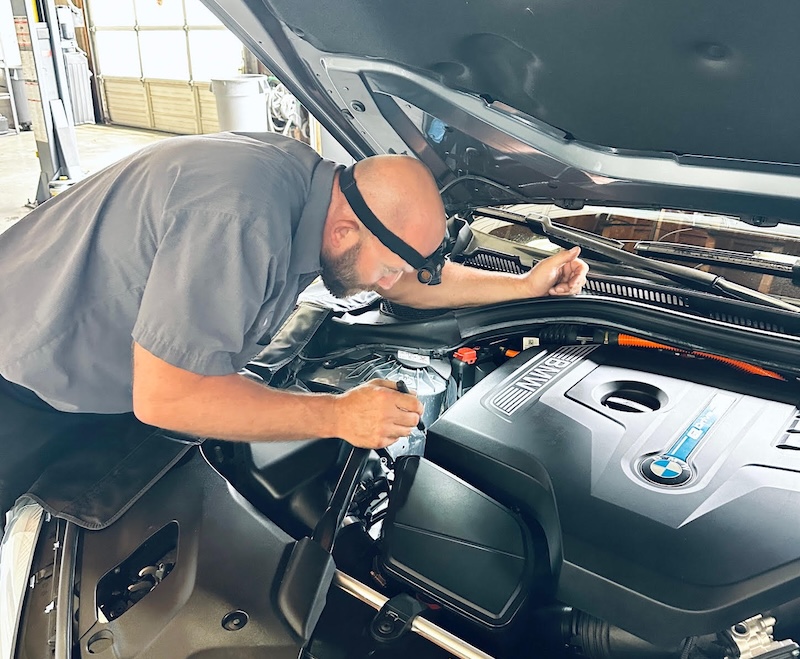
Buying a used MINI or BMW is exciting, and for good reason. These are genuinely great cars. They drive like nothing else, they hold their character for years, and the right one will keep you smiling every time you turn the key.
But European vehicles carry a specific kind of risk when they’ve been neglected. The previous owner’s maintenance habits become your problem the moment you sign.
A little homework upfront can be the difference between a great buy and an expensive lesson. Here’s what we’d tell a friend before they handed over the cash.
MINI-Specific Things to Watch For
MINIs are some of the most fun cars on the road. They’re also some of the most misunderstood by both buyers and some mechanics. Knowing the platform you’re buying into makes a real difference.
R56 generation (2007–2013). This is the generation that gave MINIs the reputation for being “expensive to own.” Most of that reputation comes down to a handful of known service items: timing chain and tensioner wear, oil consumption that ranges from mild to alarming, and cooling system components (water pump, thermostat housing) that have a predictable lifespan. None of these are dealbreakers if they’ve been properly addressed. All of them are dealbreakers if they haven’t. Ask specifically whether the timing chain and tensioner have been done, and ask for the receipt.
R55, R57, R58, R59 variants. Same platform, same concerns. Clubman, Convertible, Coupe, Roadster — the body changes, but the powertrain story doesn’t. If you’re shopping any of these, treat them with the same scrutiny as an R56.
F-series (2014 and newer). More BMW architecture under the skin, and overall a more reliable platform than the R-series. The trade-off is electronic complexity. There are more modules, more sensors, more things that can throw a fault code. None of that is bad, it’s just worth verifying that everything works the way it’s supposed to, not just on the test drive but on a proper diagnostic scan.
JCW models. Higher performance means higher wear, especially if the previous owner drove it the way it’s meant to be driven and didn’t keep up with maintenance. A JCW that’s been tracked or modified isn’t automatically a bad buy — but it does need to be evaluated honestly, with the history to back it up.
A note on “needs a little TLC.” In a MINI listing, that phrase usually means one of three things: a known service item the owner doesn’t want to pay for, a check-engine light they’ve been clearing, or a list of small things that have quietly added up. None of those are necessarily disqualifying. But “TLC” is rarely as little as it sounds.
BMW-Specific Things to Watch For
BMWs are engineered to a high standard, and a well-maintained example will outlast a lot of what’s on the road. The catch is the word “well-maintained.” A BMW that’s been cared for is a joy. A BMW that’s been neglected is a project.
E-series vs. F-series. Generally speaking, the E-series (think E90, E92, E60, E70) is mechanically simpler and easier to diagnose, but it’s also older, which means more wear-and-tear items to verify. The F-series brings tighter build quality and better refinement, with more electronic complexity to match. Neither is inherently better; both reward a careful pre-purchase inspection.
Cooling system components. Across multiple generations of BMW, the cooling system is a known maintenance item: water pump, thermostat, expansion tank, hoses. These parts wear on a timeline. If the car you’re looking at is past the typical replacement window and there’s no receipt showing the work has been done, assume it’s coming.
Oil leaks. Common across BMW engines. Manageable if caught early. Expensive if ignored long enough to soak the wrong components. Look underneath. Active wet leaks are different from old dry residue, both are worth understanding.
N54 and N55 engines. These are strong, capable engines with a well-documented list of service items: HPFP (high-pressure fuel pump), injectors, charge pipe, valve cover gasket, and a few others depending on year. The right question is “have the known items been addressed on this specific car?”
Electronic systems. Modern BMWs have a lot of them. iDrive, comfort access, parking sensors, adaptive headlights, the works. Verify everything works before you buy. A fault in one module is often inexpensive to fix; a cascade across several can add up fast.
Start Your Research Before You See the Car
Pull the vehicle history. Carfax and AutoCheck are the obvious starting points, but read them carefully. You’re not just looking for accidents. You’re looking for the maintenance trail: where it’s been serviced, how often, and whether there are gaps. A car with regular records at a reputable shop tells a very different story than one with nothing on file.
Know the model year’s reputation. Some generations have well-known weak points. Others are genuinely bulletproof. A few minutes on owner forums, or a quick call to a specialist, will tell you whether the car you’re looking at is a known good year or one that requires extra scrutiny.
Mileage isn’t everything. A well-maintained 100,000-mile car beats a neglected 40,000-mile car every time. What you want is consistent service, not low numbers on the odometer. A car that’s been driven regularly and maintained on schedule will almost always outlast the garage queen that sat for two years between oil changes.
Ask for service records upfront. A seller who has them will share them readily. A seller who doesn’t usually has a reason. Inspections may matter even more here.
The In-Person Walkthrough
Before you bring in a specialist, there’s plenty you can check yourself. None of this requires a lift or special tools, just attention and a little patience.
Cold start behavior. Ask the seller not to warm the car up before you arrive. Listen to the first 30 seconds: smoke from the exhaust, rough idle, unusual ticking or knocking. A healthy engine settles into a smooth idle quickly. A struggling one tells on itself in the first minute.
Look underneath. Get low. Look for active wet leaks versus old, dry residue. A small amount of dry oil staining on an older car is normal. A fresh pool of anything is not.
Tire wear patterns. Tires tell a story. Uneven wear across the tread can indicate alignment issues. Heavy inside-edge wear often points to worn suspension components. Two new tires on one axle and bald tires on the other usually means corners were cut.
Interior electronics. Cycle through everything. Windows, locks, mirrors, sunroof, infotainment, climate control, parking sensors, seat adjusters, every button on the steering wheel. Anything that doesn’t work is either a small fix or the tip of a larger electronic problem, and you’ll want to know which before you buy.
Body panel gaps and paint. Inconsistent panel gaps or paint overspray on seals and trim point to prior bodywork that may not show up on a Carfax. Not always a dealbreaker, but always a conversation.
Trust your instincts on the seller. How someone talks about their car matters. Owners who know their car — who can tell you when the last service was, what they’ve replaced, what they’re aware of — are usually telling the truth. Sellers who can’t answer basic questions, get defensive, or rush you through the walkthrough are telling you something too.
Why the Pre-Purchase Inspection Is Worth It
A general mechanic can tell you if something is obviously broken. A European specialist can tell you what’s about to break, what’s been deferred, and whether the asking price actually reflects the car’s condition. For a MINI or BMW, that distinction is significant.
A proper pre-purchase inspection on a European car should include a full diagnostic scan (not just whatever’s currently illuminated, but stored and historical fault codes too), a fluid inspection across the major systems, a suspension and brake check, and a visual review of the engine bay and undercarriage for leaks, prior repairs, and wear patterns. That’s what we cover when a PPI rolls into our bay at The BMW Guy — and it’s what you should expect from any good shop doing this work.
The inspection isn’t about killing the deal. It’s about making sure the deal is what the seller says it is. Sometimes we hand back a clean report and the buyer drives away in a great car. Sometimes we find something significant and the buyer renegotiates or walks away and finds a better one. Either outcome is a win, because the buyer made the decision with the full picture in front of them.
Green Flags: What a Well-Maintained Example Looks Like
Once you know what to look for, the right car tends to stand out from the rest.
Here’s what a well-maintained example looks like:
- A consistent service history with a reputable shop, with records you can actually see
- Receipts for known maintenance items — cooling system, brakes, fluids, filters, timing components where applicable
- An owner who can talk knowledgeably about the car: what’s been done, what’s coming up, how it drives
- A clean diagnostic scan with no stored fault codes (not just no current ones)
- An asking price that reflects honest condition — not the top of the market for the model, and not suspiciously low
We're Here for You in San Marcos, CA
If you’re shopping for a used MINI or BMW anywhere in North County San Diego — San Marcos, Escondido, Carlsbad, Vista, or beyond — a pre-purchase inspection is one of the smartest hours you’ll spend on the entire process. We’ve helped a lot of buyers walk into a deal with their eyes open, and we’ve helped a few walk away from one they would’ve regretted.
Call us. Ask questions. Visit the shop. Meet Andrew and the team. We want you to choose confidently, whether the car you’re looking at is the one or not.
Call us:
760-716-4677
Stop by:
1288 W. San Marcos Blvd, San Marcos CA 92078
Shop hours:
Monday – Friday
8am to 5pm
Saturday
9am – 4pm
After hours key drop available 24/7.