
More Than Just Getting From Point A to Point B
There was a time when the main purpose of a car was simple: get you from one place to another. As long as the engine started, the wheels turned, and you reached your destination, the car had done its job.
But over the years, our expectations have changed. We no longer want our vehicles to simply transport us. We want them to make every journey enjoyable.
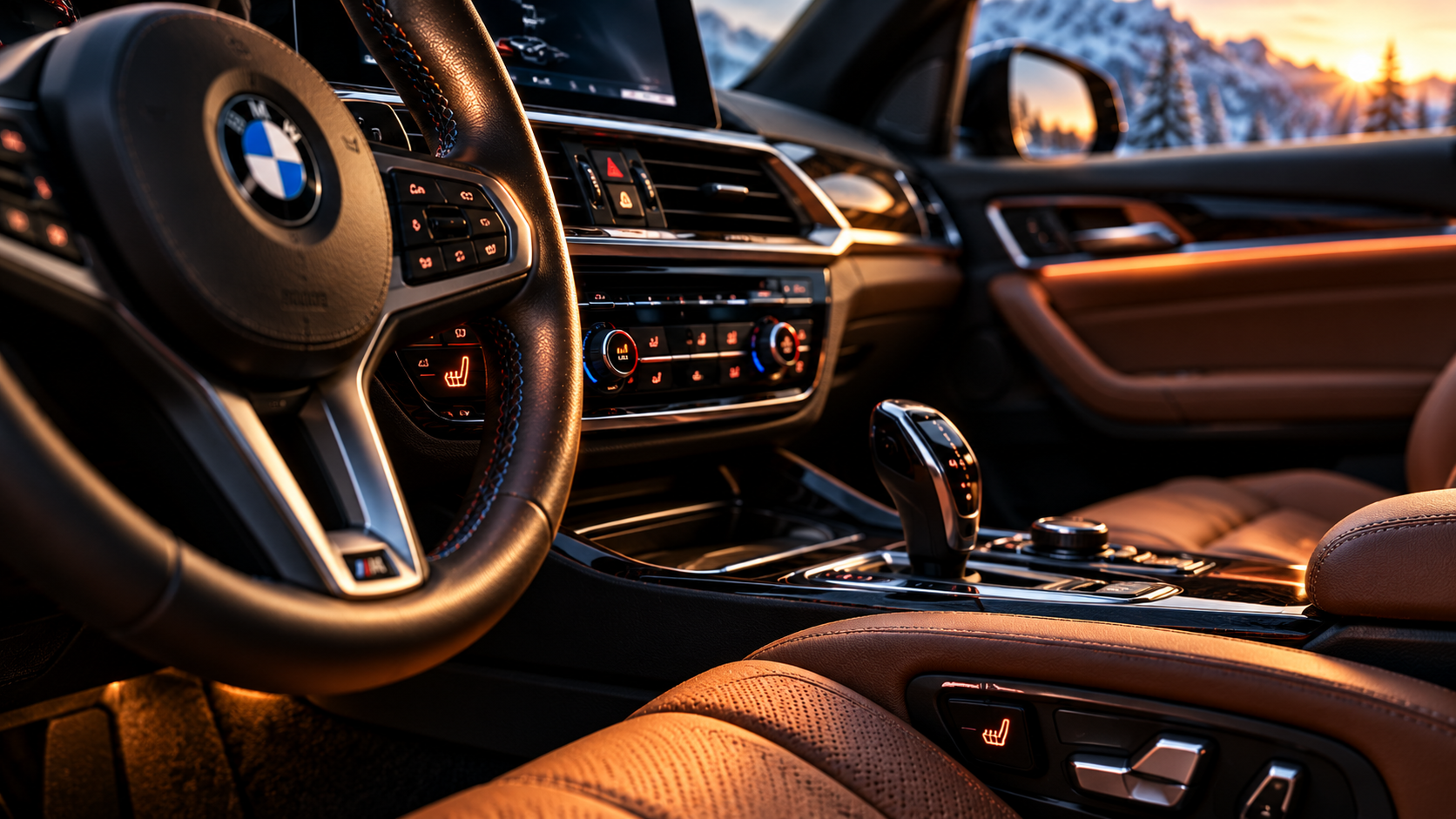
Automakers have spent decades improving not only performance and safety, but also the little things that make a big difference behind the wheel. Comfortable seats, carefully controlled cabin temperatures, warm steering wheels, and even the ability to heat your car before stepping outside have transformed the driving experience.
BMW and MINI have embraced this evolution, combining their distinctive driving characteristics with technology designed to keep drivers and passengers comfortable.
And when the colder season arrives, some of these features become especially appreciated.
After all, there’s something particularly nice about settling into a warm seat, wrapping your hands around a heated steering wheel, and enjoying a comfortable cabin while the morning air outside is still chilly.
But have you ever wondered how all these features actually work? And how much technology is involved in keeping you comfortable?
A Little Warmth Goes a Long Way
The traditional car heater has come a long way. What was once a relatively simple way to warm the passenger compartment has evolved into a sophisticated climate control system.
Many BMW and MINI models can automatically adjust fan speed, airflow, and temperature to maintain the driver’s preferred settings. Some vehicles even offer separate climate zones, allowing passengers to choose their own level of comfort.
But cabin heating is only the beginning.
Heated seats have become one of the most appreciated comfort features. Rather than waiting for the entire interior to warm up, they deliver heat directly to your body. Depending on the model, you can select different heating levels, and certain BMWs even allow you to adjust how warmth is distributed between the seat cushion and backrest.
Then there’s the heated steering wheel. It might seem like a small luxury, but anyone who has used one on a cold morning knows how pleasant it is to hold a warm steering wheel instead of waiting for the cabin heater to do its job.
Other features work so quietly that we barely think about them. Heated exterior mirrors help clear condensation and frost, while rear window defrosters restore visibility without requiring you to wipe the glass. The windshield defogging system helps keep your view of the road clear, making these features important for safety as well as comfort.
And modern technology has taken things even further. Certain BMW and MINI models offer remote climate activation or preconditioning, allowing you to prepare the cabin before you even get inside.
Of course, not every model has every feature. Equipment varies by vehicle, model year, and options. But whether your car has a basic heater or a sophisticated multi-zone climate system, all these technologies share one purpose: making the driving experience more comfortable.
Where Does All That Warmth Come From?
We rarely think about what happens behind the dashboard when we turn up the temperature. Yet something as simple as warm air coming through the vents involves several systems working together.
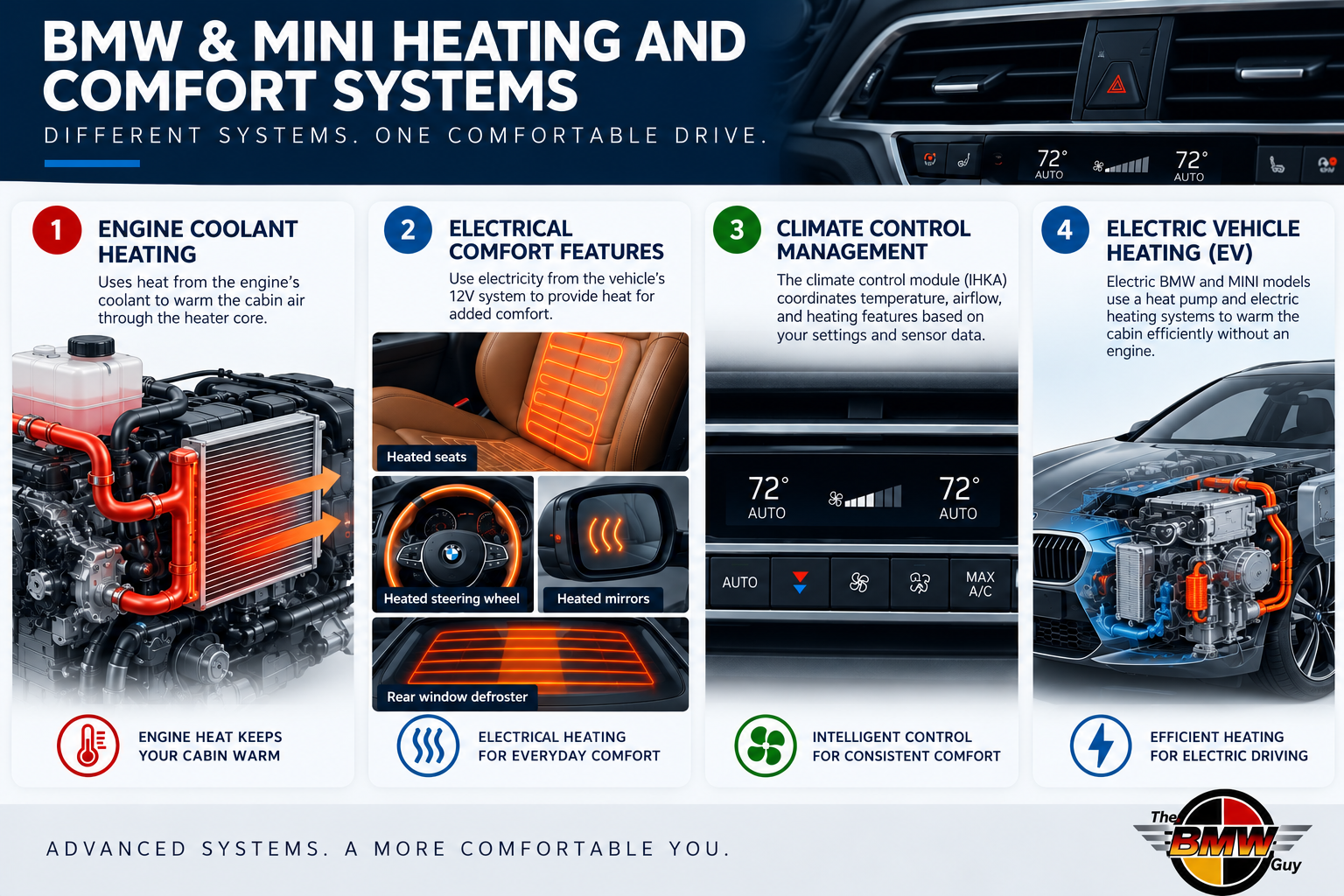
In most gasoline-powered BMW and MINI vehicles, cabin heat comes from something the engine already produces: heat.
As the engine runs, coolant circulates through the cooling system, absorbing excess heat. Some of that heated coolant passes through a small radiator called the heater core, located inside the vehicle’s heating and ventilation system.
Air moves across the heater core, absorbs its warmth, and enters the cabin through the vents. Meanwhile, the climate control system uses sensors and electronic controls to regulate the temperature and direct airflow where it’s needed.
It’s a clever arrangement because it makes use of heat that would otherwise need to be released through the engine’s cooling system.
But there’s an important connection here: your cabin heater depends on the health of your engine’s cooling system.
Proper coolant circulation is essential not only for maintaining engine temperature but also for delivering warm air to the cabin. This is one reason why cooling system maintenance matters even when your vehicle isn’t showing signs of overheating.
If you’d like to learn more about this connection, we’ve covered the subject in our article, BMW Losing Coolant? Common Coolant Leaks, Warning Signs & Cooling System Problems.
And while the basic principle of using engine heat has remained largely unchanged, the way modern vehicles manage that heat has become much more sophisticated.
Automatic climate control systems can monitor cabin temperature, outside temperature, and even sunlight intensity. Instead of constantly adjusting the controls yourself, you simply choose a comfortable temperature and let the system do the work.
It’s one of those conveniences that feels completely ordinary today, even though there’s quite a bit of engineering behind it.
The Technology Hidden Inside Your Seats and Steering Wheel
While the cabin heater uses warmth produced by the engine, heated seats and steering wheels work differently.
They create their own heat using electrical heating elements hidden beneath the surfaces you touch.
Inside a heated seat, these elements are typically installed beneath the upholstery in the seat cushion and backrest. When you turn on the heating function, electrical current passes through the elements, generating warmth. Temperature sensors and electronic controls help maintain the selected heating level.
The heated steering wheel uses a similar principle, with a heating element positioned beneath its outer covering.
The idea itself isn’t particularly new. Automakers were experimenting with electrically heated seating decades before it became a familiar feature in modern luxury vehicles.
What has changed is the level of control and integration.
On certain BMW models, seat and steering wheel heating can be incorporated into automatic comfort settings, allowing the vehicle to manage these features according to selected preferences and operating conditions.
So while pressing a button to warm your seat might seem simple, behind that button is a carefully managed electrical system designed to deliver consistent, comfortable heat.
Some Heating Features Are About More Than Comfort
Not every heating feature is meant to keep you warm. Some are designed to help you see clearly.
Consider your rear window defroster. Those thin lines running across the glass are actually electrical heating traces. When activated, they generate heat that helps remove condensation and frost.
Heated exterior mirrors use a similar principle, with heating elements located behind the mirror glass. Depending on the BMW or MINI model, mirror heating may operate automatically under certain conditions, without requiring you to press a separate button.
The windshield defogging system, however, works a little differently.
Rather than heating the glass directly, most conventional BMW and MINI systems direct conditioned air toward the windshield. Warm airflow helps raise the glass temperature, while the air conditioning system can remove moisture from the air.
That’s right: your air conditioning system can be useful even when you’re trying to warm up the car.
Air conditioning doesn’t just cool the cabin. It also helps remove humidity, which is especially useful when warm, moist interior air meets a cold windshield.
This is why heating, air conditioning, and ventilation are all part of the same climate management system. They work together to keep the cabin comfortable and the windows clear, regardless of the season.
How Electric BMW and MINI Models Keep Warm
As automotive technology continues to evolve, even the way vehicles produce cabin heat is changing.
Traditional gasoline engines generate a considerable amount of heat during operation. Electric motors, on the other hand, are much more efficient and produce far less waste heat that can be used to warm the passenger compartment.
That creates an interesting challenge: how do you keep the cabin warm without relying on a hot engine?
Electric BMW and MINI models use electrically powered heating systems. Depending on the vehicle, these may include high-voltage heaters, heat pumps, and integrated thermal management systems.
Heat pumps are particularly interesting because, rather than producing all their heat directly through electrical resistance, they transfer heat from one place to another. Under suitable conditions, this can make cabin heating more energy-efficient.
Some electric vehicles can also warm the cabin before departure through a feature called preconditioning.
When the vehicle is connected to a charger, preconditioning may use energy from the external power supply, reducing the amount of battery energy needed to warm the interior.
It’s another example of how automotive engineering continues to develop new ways to provide the comforts we’ve come to expect.
And although electric vehicles operate differently from gasoline-powered cars, they still have maintenance needs. Our Electric Vehicle Maintenance services page explains some of the inspections and services that help keep these vehicles in good condition.
Keeping Your Comfort Features Working
With so many systems contributing to a comfortable cabin, it’s easy to forget that they also benefit from proper care.
Fortunately, most heating and comfort features don’t require complicated maintenance.
For gasoline-powered vehicles, keeping the cooling system in good condition is particularly important. Following the manufacturer’s coolant service recommendations and addressing coolant leaks promptly helps protect both the engine and the cabin heating system.
Cabin air filters deserve attention too. Over time, they collect dust, pollen, and debris, which can restrict airflow through the ventilation system. Replacing them at appropriate intervals helps maintain effective heating, cooling, and windshield defogging.
Electrical comfort features, such as heated seats and steering wheels, generally require little routine maintenance. Still, avoiding sharp objects or excessive concentrated pressure on seat cushions can help protect the heating elements beneath the upholstery.
It’s also worth being careful when cleaning the inside of the rear window, since abrasive tools can damage the delicate heating traces.
And perhaps the simplest preparation of all is to test these features before you need them.
On a cooler morning, take a moment to check the cabin heater, heated seats, steering wheel heating, and window defogging functions. Making sure everything operates as expected can save you from discovering a problem when temperatures drop further.
Regular maintenance helps keep the rest of your vehicle in good condition too. If you’re wondering what services your vehicle actually needs, our Car Maintenance Checklist: What Does My Car Actually Need? explains how maintenance requirements differ by vehicle, age, mileage, and powertrain.
Of course, even well-maintained components can eventually wear out. Knowing what to watch for can help you recognize when it’s time for a professional inspection.
Common BMW & MINI Heating Questions
Why is my BMW or MINI Cooper heater blowing cold air?
Low coolant, a malfunctioning thermostat, restricted heater core, or faulty climate control components can prevent warm air from reaching the cabin. If the problem is accompanied by a low coolant warning, the cooling system should be inspected promptly.
Why does my BMW heater work while driving but blow cold air at idle?
This can indicate low coolant, trapped air in the cooling system, or insufficient coolant circulation. The exact cause requires diagnosis, particularly if the problem developed suddenly.
Why does my BMW or MINI take so long to warm up?
Gasoline engines need time to produce usable heat, especially during colder weather. However, an unusually long warm-up period may indicate a thermostat that isn’t regulating engine temperature correctly or another cooling system issue.
Why is my BMW or MINI Cooper heated seat not working?
Possible causes include a damaged heating element, faulty temperature sensor, electrical connection issue, or control component failure. Some vehicles may also temporarily limit comfort functions when battery charge is low.
Why is my BMW heated steering wheel not working?
The problem may involve the heating element, electrical connections, controls, or vehicle power management. Proper electrical diagnosis can help determine the cause before components are replaced.
Why do my BMW windows keep fogging up?
Excessive interior moisture, restricted airflow, a dirty cabin air filter, or an air conditioning malfunction can contribute to persistent fogging. The A/C system helps remove moisture even when the heater is operating.
Can a coolant leak affect my BMW’s heater?
Yes. Low coolant can interfere with circulation through the heater core, reducing cabin heating performance. Continued coolant loss can also lead to engine overheating, making prompt diagnosis important.
Do electric BMW and MINI vehicles have heaters?
Yes. Electric models use electrically powered heating systems rather than relying on combustion-engine heat. Depending on the model, these may include high-voltage heaters, heat pumps, and cabin preconditioning functions.
Enjoy Every Mile, Whatever the Temperature
Automotive technology has come a remarkable distance from the days when simply having a functioning heater was considered a luxury.
Today, BMW and MINI vehicles surround us with features designed to make driving more pleasant, from intelligently controlled cabin temperatures to heated seats, warm steering wheels, and climate systems that can prepare the vehicle before we even step inside.
And while we may not think much about these features during warmer months, the first chilly morning reminds us how much we appreciate them.
At The BMW Guy in San Marcos, California, we regularly diagnose cooling system, climate control, and electrical comfort problems in BMW and MINI vehicles. Understanding how these systems work together helps us identify the cause and recommend the appropriate repair rather than simply replacing parts based on symptoms.
Whether your cabin heater isn’t keeping up, your heated seat has stopped working, or your climate control system isn’t behaving as it should, our team is here to help.
We proudly serve BMW, MINI, and European vehicle owners throughout North County San Diego and the greater San Diego area, including San Marcos, Oceanside, Vista, Escondido, Carlsbad, Poway, Rancho Bernardo, and San Elijo Hills.
Schedule Your Service with The BMW Guy
Book online:
Choose a convenient day and time slot and book your appointment directly through our website.
Call us:
760-716-4677
Stop by:
1288 W. San Marcos Blvd, San Marcos, CA 92078
Shop hours:
Monday – Friday: 8am – 5pm
Saturday: 9am – 4pm
After-hours key drop available 24/7.
Keep every drive comfortable, whatever the temperature. Because a great driving experience should feel just as good as it performs.